
Buyer Guide • CCTV • Australia
CCTV Camera Types: Bullet, Dome, Turret and PTZ Explained
The shape of a CCTV camera isn’t cosmetic — it determines the field of view, vandal resistance, mounting flexibility, and suitability for indoor vs outdoor use. Here’s what each type actually does, where installers recommend each one, and which combination works for a typical Sydney home or business.
Primary sources: AS 2201 intruder alarm standard.
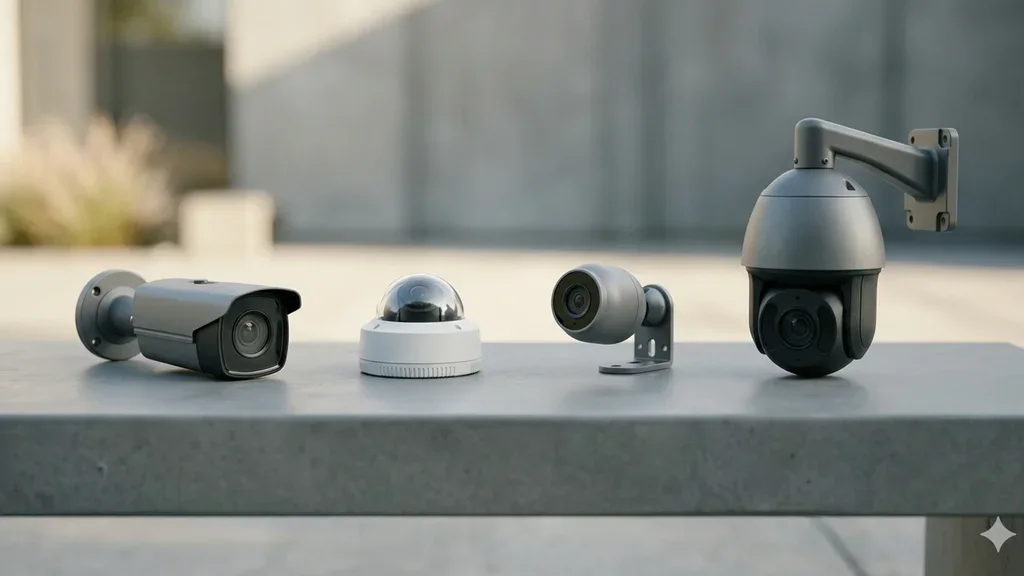
What the Camera Shape Actually Affects
Camera shape determines three things: where it can be mounted (ceiling, wall, eave, pole), how vandal-resistant it is (dome enclosures are hard to grab or redirect; bullets can be pushed off-aim), and how much attention it draws (visible deterrence vs discreet monitoring). The optics and resolution inside are independent of the shape — you can get a 4K turret or a 4K bullet with identical image quality. The choice is about form factor and deployment, not image performance.
Bullet Cameras — Long Range, Outdoor Focus
Bullet cameras are the cylinder-shaped cameras you see mounted on walls and eaves, pointing in one direction. They're designed for outdoor, fixed-direction surveillance at medium-to-long range.
- Best for: Long driveways, carpark lanes, fence lines, building perimeters
- Strengths: Clear directional aim (everyone knows where it's pointing = strong deterrent), built-in IR for night vision, often weather-rated IP67
- Weaknesses: Can be grabbed and redirected by someone tall enough to reach; visible mounting makes them a target for vandals; limited vertical adjustment
- Typical use: 1–2 bullets covering a long driveway or fence line, paired with domes or turrets at entry points
Dome Cameras — Vandal-Proof, Indoor/Outdoor
Dome cameras sit inside a rounded enclosure flush-mounted to a ceiling or eave. The dome shape makes it impossible to tell exactly where the lens is pointing from the ground — useful for coverage ambiguity.
- Best for: Indoor ceilings (retail, office, reception), covered outdoor areas, vandal-prone locations
- Strengths: Vandal-resistant (IK10 impact-rated domes withstand direct blows), flush mounting is discreet, wider viewing angle options (2.8mm dome covers a full room)
- Weaknesses: IR reflection off the dome glass can reduce night image quality (newer models fix this); harder to adjust post-install if the angle needs changing
- Typical use: Retail shop ceilings, apartment building lobbies, strata car parks, office ceilings
Turret Cameras — The 2026 Installer Favourite
Turret cameras (also called eyeball cameras) have a ball-and-socket mount inside an open housing. The lens sits exposed — no dome glass — which means no IR reflection at night and easy angle adjustment after mounting.
- Best for: Residential front doors, garage entries, back yards, side paths — anywhere you need clear night vision and easy aim adjustment
- Strengths: Best night image quality (no dome glass between IR and subject), easy to reposition after install, compact and modern-looking, available in 4K with AI detection
- Weaknesses: Less vandal-resistant than a dome (the exposed lens can be obscured with paint or tape); mounting bracket is visible
- Typical use: Most Sydney residential installs in 2026 use turrets as the default camera. Hikvision ColorVu turrets and Dahua Full-Color turrets are the two most-installed models in the Sydney residential market.
PTZ Cameras — Pan, Tilt, Zoom
PTZ cameras can rotate horizontally (pan), tilt vertically, and optically zoom to focus on specific areas. They're controlled remotely via app or monitoring software.
- Best for: Large open areas (warehouses, construction sites, car parks, sporting fields) where a single camera needs to cover a wide area with the ability to zoom into detail on demand
- Strengths: One PTZ can replace 3–4 fixed cameras in a large space; optical zoom means you can identify a face or number plate from 50+ metres; auto-tracking models follow moving subjects
- Weaknesses: Expensive ($1,000–$4,000+ per unit); mechanical parts can fail over time; when the PTZ is zoomed into one area, it can't see the rest; requires operator attention or AI auto-tracking to be effective
- Typical use: Commercial sites, construction sites, large car parks. Rarely needed for residential. If a quote includes a PTZ for a 3-bedroom house, question it.
Which Combination Works for a Typical Sydney Home?
For a standard single-storey Sydney house, the most common 2026 configuration is:
- 2× turret cameras at front door and driveway (best night vision, easy to aim)
- 1× turret or bullet covering the back yard or rear access
- 1× turret on the side path or garage entry
Total: 4 cameras. All turrets works well. Mix in a bullet if you have a long straight driveway where the directional aim matters. Add a dome if you're mounting in a covered area where vandal resistance matters (e.g. a strata building lobby).
For a small retail shop: 2–3 domes on the ceiling inside + 1 turret outside at the entrance. For a warehouse: 4–8 turrets on walls + 1 PTZ covering the loading dock.
Frequently Asked Questions
Which CCTV camera type is best for a Sydney home?+
Turret cameras are the default recommendation for most Sydney residential installs in 2026. They offer the best night image quality (no dome glass IR reflection), easy angle adjustment, and compact modern design. A typical 4-camera home system uses all turrets.
What's the difference between a dome and a turret camera?+
Dome cameras sit inside a sealed glass enclosure (vandal-resistant, ambiguous aim direction). Turret cameras have an exposed lens on a ball-and-socket mount (better night vision, easier to adjust, but less vandal-resistant). For homes: turrets. For vandal-prone commercial: domes.
Do I need a PTZ camera for my home?+
Almost certainly not. PTZ cameras are designed for large open areas where you need to zoom across 50+ metres. For a residential property, 4 well-placed fixed cameras (turrets) cover everything a PTZ would — at a fraction of the cost. If someone quotes a PTZ for a standard house, get a second opinion.
Are bullet cameras still recommended in 2026?+
For specific use cases, yes — long driveways, fence lines, and perimeter monitoring where the directional aim provides clear deterrent value. For general residential entry points, turrets have largely replaced bullets because of their superior night vision and easier adjustment.
What does IK10 vandal rating mean on a dome camera?+
IK10 means the camera enclosure can withstand 20 joules of impact — roughly equivalent to a 5kg weight dropped from 40cm. This is the highest IK rating and means the dome can survive direct kicks, thrown objects, and deliberate tampering attempts. Standard for commercial and strata installations.
Can I mix different camera types in one system?+
Yes — and it's recommended. Use the right camera shape for each location. Turrets for entry points with good night vision, bullets for long-range coverage, domes for vandal-prone indoor ceilings. They all connect to the same NVR and appear in the same app.
Need help choosing cameras for your property?
We'll walk your site, assess each camera position, and recommend the right type for each spot. Turret, dome, bullet, or mix — based on your layout, not a one-size-fits-all kit.
Related Reading
- Buyer GuideHow Many CCTV Cameras Do I Need?Once you know which type, work out how many.
- Cost GuideCCTV System Cost SydneyCamera type affects price — here's the full cost breakdown.
- ComplianceNSW Camera Privacy LawsBefore you install, know where you can and can't point them.
- ComparisonIP vs Analogue CCTVCamera type and connectivity choice are linked.