
Safety & Buyer Guide • EV • 2026
Granny Charger vs Wall Charger Sydney — Which You Actually Need
You took delivery of your EV last week. In the boot, there’s a cable with a chunky box on it that plugs into a standard power point. It’s called a granny charger — and the short answer is it’s safe in the right conditions, risky in the wrong ones. Here’s how to tell which you’re in, written by a licensed Sydney electrical team that installs dozens of wall chargers a month and sees what old sockets do under sustained load.
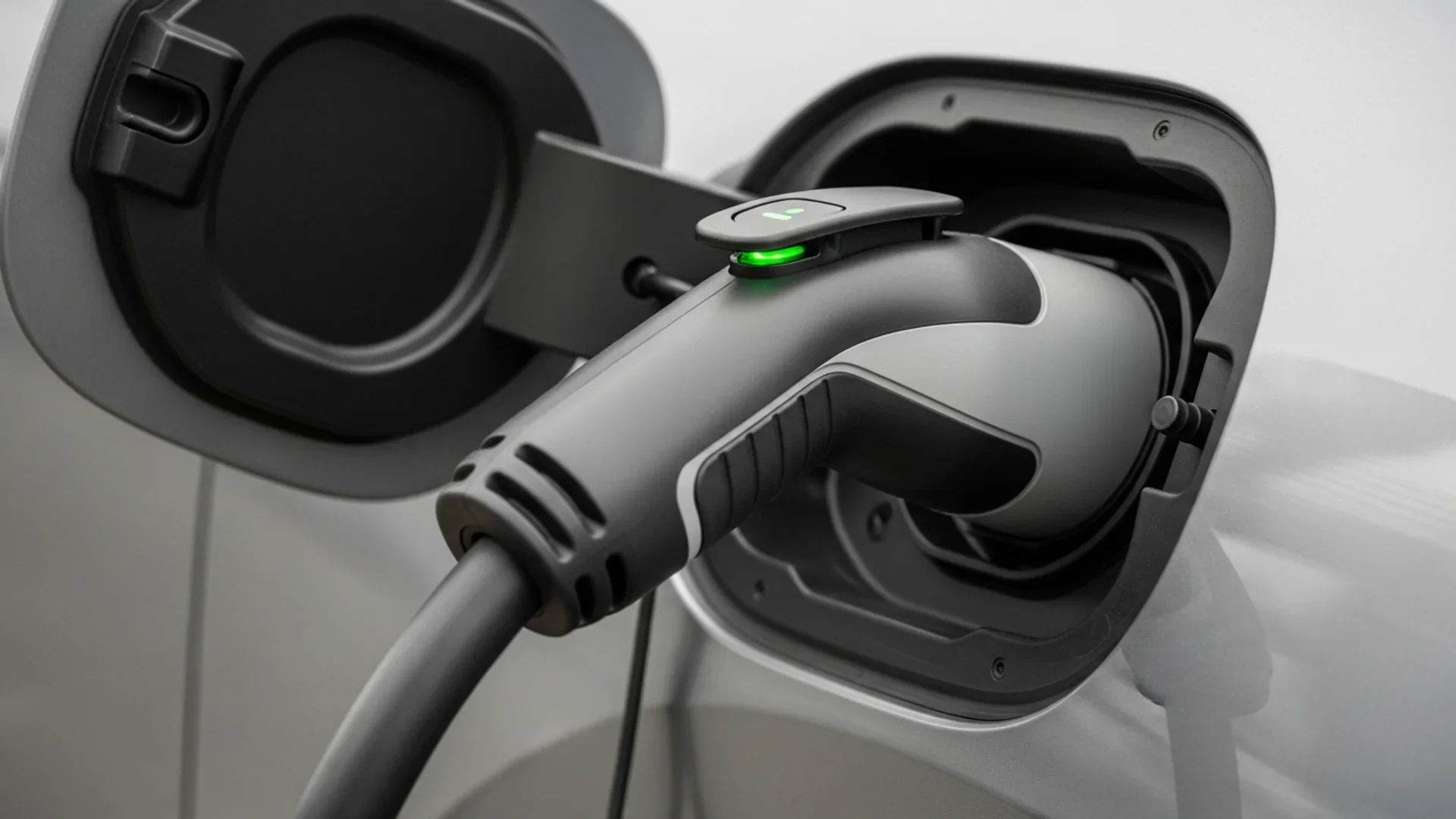
The Short Answer — When a Granny Is Fine
| Your situation | Verdict | Why |
|---|---|---|
| Under 40 km/day, modern wiring | Granny is fine | 3–4 hrs overnight covers your daily use. Safe on a good 10 A GPO. |
| 40–70 km/day, unsure about wiring | Get a 15 A outlet | Middle option. ~$500–$1,000. Dedicated circuit, safer, faster. |
| 70+ km/day, or weekly road trips | Wall charger | Granny can't keep up. You'll be chronically below target battery. |
| Solar owner | Wall charger | Smart wall charger diverts surplus solar. Granny can't. |
| Pre-1970 house, old GPOs | Wall charger (urgent) | Sustained 10 A on worn contacts is a genuine fire risk. |
This post is general information, not electrical advice. If you’re unsure whether your home wiring can handle overnight EV charging, book a site inspection with a licensed electrician. It takes 30 minutes and costs far less than a fire.
What a Granny Charger Actually Is
The portable cable that comes with most new EVs in Australia isn’t technically a charger — the actual charger lives inside the car. The cable is a Mode 2 EVSE (Electric Vehicle Supply Equipment), specifically an In-Cable Control Box (ICCB). That rectangular unit halfway along the lead is doing three things: checking the plug is safe, talking to the car about how much current to draw, and cutting power if anything goes wrong.
The unit itself is safety-aware. The risk — when there is one — sits outside the unit. It’s the wall socket, the wiring behind it, and anything you add between the unit and the wall.
| Type | Power delivered | Range added per hour |
|---|---|---|
| 8 A granny Some AU EVs ship at this limit | ~1.8 kW | ~8–10 km |
| 10 A granny Most common — plugs into any standard GPO | ~2.3 kW | ~10–12 km |
| 15 A granny Requires a dedicated 15 A outlet (blue round-pin) | ~3.3 kW | ~15–18 km |
How Long Does a Granny Charger Actually Take?
The honest answer: a long time. Here’s how long to charge a typical 75 kWh EV (Model Y, Polestar 2, Kia EV6 Standard) from near-empty to full on every option. Numbers assume ~90% AC charging efficiency, rounded conservatively.
The practical framing most buyers miss: you rarely need to charge from empty. Average Sydney daily driving is around 37 km. That’s 7–8 kWh — a 10 A granny replaces that in under four hours overnight, easily. The granny only starts breaking down as a plan when you’re driving 70 km+ daily, doing weekend trips, or need a reliable full-charge-by-morning guarantee.
Is a Granny Charger Safe? The Honest Answer.
Most of the time, on a modern home with good wiring and a GPO in good condition, the answer is yes. The risk lies in specific conditions you can check for.
Fire and Rescue NSW’s position is that EV charging incidents are low frequency but potentially high consequence — which is the right way to frame it. You don’t panic, but you do check.
When the granny is genuinely fine
- You drive under 40 km a day
- The GPO is in good condition (firm plug fit, no discolouration, no warm feel)
- The GPO is on its own circuit or a lightly loaded circuit
- The house wiring is modern (post-1980 at minimum, or has been inspected)
- No extension cord, no double adaptor, no powerboard
- The bundled EVSE has a compliant RCD (every manufacturer unit does)
- You charge overnight when other loads are low
When a granny is NOT adequate
- Daily driving exceeds 60–70 km
- The GPO is old, worn, or shows any heat marks
- You're on pre-1970 wiring (aluminium, rubber insulation)
- You're in a strata building trying to charge from a shared outlet
- You own a large-battery EV (85+ kWh) and regularly run it down
- You have solar and want to charge on surplus
- You need the car ready for a long trip tomorrow
The Middle Option Nobody Talks About — a Dedicated 15 A Outlet
Most cost guides jump straight from granny to full wall charger install. There’s a legitimate middle option that costs around $500–$1,000 installed in Sydney: a dedicated 15 A circuit with a proper 15 A round-pin outlet (the blue-pin style you see for caravans and serious tools).
What you get:
- A separate circuit from the switchboard — not competing with the fridge, aircon, or oven
- Rated for 15 A continuous — properly sized for a granny charger running overnight
- Installed by a licensed electrician on new wiring, with an RCD
- ~15–18 km/hr of charging — enough for 40–60 km/day commuters
- No wall-mounted EVSE hardware required — use the same portable granny (or an aftermarket 15 A version)
It’s the sensible upgrade for anyone who drives 40–60 km a day, isn’t sure about their home wiring, doesn’t have solar yet, and doesn’t want to spend $2,500 on a full wallbox installation.
When You Actually Need a Wall Charger
Four situations where a wall charger isn’t optional — it’s the right call. Not because granny is dangerous, but because it stops keeping up with what you actually do.
Driving more than 70 km a day
A 10 A granny adds ~10 km/hr. 70 km/day needs 7+ hours overnight just to keep even. Miss a night and you’re behind. Life happens — long workdays, unexpected errands — and granny users end up chronically near empty or compromising routes. A 7.4 kW wall charger gives you full flexibility with a 2–3 hour overnight top-up.
You have rooftop solar
This is where a wall charger pays for itself. A smart wall charger (Zappi, Ocular IQ, Wattpilot) diverts surplus solar into the EV at near-zero cost per km, instead of your panels exporting at 3–8¢/kWh. Granny can’t do this — it charges at fixed rate from the grid whenever plugged in. For most Sydney solar households, a wall charger pays back in 12–18 months.
Large-battery EV (85+ kWh) or weekly road trips
Rivian R1S, F-150 Lightning, Kia EV9, Volvo EX90 — anything with an 85+ kWh battery is too big to reliably charge on a granny. Same for anyone who does Sydney-to-Canberra weekends or beach trips with a solid battery drop. Wall charger + DC public fast top-ups is the right pattern here.
You want reliability, full stop
Some EV owners don’t want to think about charging. Plug in, wake up, full. A 7.4 kW wall charger makes that a non-decision. A granny makes it a daily small calculation. If you value the set-and-forget, the $1,500–$3,000 install is buying you peace of mind — which is a real thing.
How Much Does Each Option Cost?
| Option | Total cost (installed) | Best for |
|---|---|---|
| Bundled 10 A granny Comes with most new EVs | $0 (already have it) or $200–$500 aftermarket | Low daily km, good wiring, occasional use |
| Dedicated 15 A circuit Licensed electrician install | $500 – $1,000 | 40–60 km/day commuters, older wiring, budget-conscious |
| 7.4 kW single-phase wall charger Full wallbox install | $1,500 – $3,000 | Most Sydney households — reliable overnight charge, solar option |
| 11–22 kW three-phase If 3-ph available + compatible EV | $3,000 – $5,500+ | High-km drivers, multiple EVs, property with 3-phase already in |
Special Situations — Renters, Strata, Solar
Renters
If you rent, your granny is probably your only realistic option — you can’t hardwire a wall charger to a property you don’t own. That’s fine. Do this:
- Ask your landlord/agent in writing whether EV charging is permitted
- Have the GPO you’ll use inspected by an electrician before you start (a 30-minute visit, $100–$200)
- Use ONLY the manufacturer-supplied EVSE, directly plugged into the wall, no extensions
- If the GPO feels warm after a session, stop immediately and flag it to the landlord
Some landlords will agree to install a dedicated 15 A circuit if you ask — it’s a real property improvement and costs them ~$500–$1,000.
Strata and apartments
NSW strata law has shifted in your favour since 2021. Owners corporations can no longer block EV charger installations on aesthetic grounds. The approval process now passes with less than 50% against — a significantly lower hurdle than the old rules.
The practical reality is still: expect 4–8 weeks from first enquiry to commissioned charger, most of it committee process. In the meantime, a granny charger plugged into your own allocated parking bay’s GPO (if there is one) is a legitimate interim solution.
See our strata EV charger installation page for the full process.
Solar owners — a wall charger pays for itself
If you have 6 kW+ of rooftop solar, a smart wall charger with solar divert (Zappi, Evnex E2 Eco, Ocular IQ Home Solar, Fronius Wattpilot) will typically save you $1,500–$2,200/year vs grid charging. The $1,500–$3,000 install cost pays back in roughly 12 months.
Granny chargers can’t do solar divert — they draw from wherever your house grabs power, which at overnight is always the grid at full rate. For solar households, this is the single strongest argument for upgrading.
Insurance & Warranty — Things People Forget to Check
The bundled EVSE that came with your car is fully covered by the manufacturer’s warranty. You can’t void the warranty by using the cable the car came with.
Where things get dicey is:
- Non-compliant aftermarket units. If you bought a no-name granny charger from overseas without AU certification, you may be outside both EV warranty and home insurance coverage if something goes wrong.
- DIY wall charger installation. Illegal in NSW, voids charger warranty, and can affect home insurance claims if a fire ever traces back to it.
- Extension cords and adaptors. Using these with a granny is almost certainly outside what any insurer considers reasonable use. Claims here are routinely refused.
The simplest rule: use what the manufacturer supplied, plugged into a GPO in good condition, with no intermediate devices. Or get a proper wall charger installed by a licensed electrician who lodges the CCEW. Both of those keep you inside warranty and insurance coverage.
The SRS Honest Decision Matrix
| Your situation | Recommended | Why |
|---|---|---|
| City driver, <40 km/day, newer home | Granny charger is fine | 3–4 hrs overnight covers daily use. GPO inspected + modern wiring = safe. |
| Commuter, 40–60 km/day, unsure wiring | Dedicated 15 A outlet | $500–$1,000 installed. Safer than granny on shared circuit, ~$2,000 cheaper than wall charger. |
| Commuter, 60+ km/day, any property | 7.4 kW wall charger | Reliable overnight full charge. Granny can't keep up. |
| Solar owner | Smart wall charger (Zappi / Ocular / Wattpilot) | Solar divert saves $1,500–$2,200/yr. Granny can't do this. |
| Large-battery EV (85+ kWh) | 7.4 kW wall charger minimum | Granny topping up 85+ kWh takes 40+ hours. Impractical. |
| Rental or short-stay (<2 yrs) | Granny + GPO inspection | Can't hardwire to someone else's property. Check the socket is safe. |
| Pre-1970 home, no rewire since | Wall charger + circuit check | Old wiring + continuous 10 A = risk. Do it properly. |
| Weekend road-tripper | Wall charger + DC fast as needed | Fresh full battery for Friday evenings. Granny can't deliver that on demand. |
Frequently Asked Questions
Is the charger that came with my EV safe to use overnight?+
In a modern Sydney home with a GPO in good condition and no extension cord, yes. The bundled EVSE has built-in RCD protection. The risk lies outside the unit: old or worn sockets, pre-1970 wiring, or plugging into extension cords or adaptors. If the socket feels warm after a session, stop and get it inspected.
How long does a granny charger take to charge a Tesla Model Y or Kia EV6?+
A 10 A granny delivers about 2.3 kW, adding around 10–12 km of range per hour. A 75 kWh battery (Model Y Long Range, EV6 Standard) goes from 20% to 100% in roughly 28 hours. In practical terms, overnight (8–10 hours) you'll add 80–120 km — enough to cover daily commuting but not to recover from a deep discharge.
Can I use an extension cord with my EV granny charger?+
No. Never. Household extension leads are not rated for 10 A continuous load over 8+ hours. This is the most common cause of melted plugs and scorched sockets. It doesn't matter if it's a thick 'heavy-duty' cord — use only direct wall plugging. Same rule for double adaptors, powerboards, and travel adapters.
Do I need a licensed electrician to install a wall charger in NSW?+
Yes. EV charger installation in NSW must be carried out by a licensed electrician. DIY installation is illegal, voids the charger warranty, and can affect home insurance. From 1 July 2026, NSW also requires electricians to lodge a Certificate of Compliance for Electrical Work (CCEW) for EV circuits. Most installs also trigger a DNSP notification to Ausgrid or Endeavour Energy — your electrician handles both.
Will using a granny charger void my EV's warranty?+
No — using the manufacturer-supplied EVSE the car came with is covered. What can void things: using non-certified aftermarket portable chargers, or DIY installing a wall charger. Stick with the bundled EVSE or go through a licensed installer for a wall charger, and you're inside warranty on both the car and the charger.
What is a 15 A outlet and is it worth installing for EV charging?+
A 15 A outlet is a dedicated circuit with a round-pin GPO (the blue one you see at caravan parks). It's rated for 15 A continuous load (about 3.3 kW), versus 10 A for a standard GPO. Installed in Sydney by a licensed electrician, it costs $500–$1,000. It's a legitimate middle option between a granny charger and a full wall charger — about 50% faster charging than a 10 A granny, much safer than granny on shared old wiring, and a fraction of the cost of a wallbox install.
Can I charge my EV in a strata apartment or rental?+
Yes to both, with caveats. In rentals, your granny charger plugged into a landlord-approved GPO (inspected by an electrician first) is your realistic option. For strata, NSW law since 2021 prevents owners corporations from blocking EV chargers on aesthetic grounds. Individual installations typically run $2,500–$4,000 after approval (which passes with under 50% against). In the meantime, a granny in your allocated bay (if there's a GPO) works as an interim.
Why does my EV charge so much faster on a wall charger than a granny charger?+
Power capacity. A 10 A granny delivers about 2.3 kW. A 7.4 kW wall charger delivers three times more (it uses 32 A from a dedicated circuit). A 22 kW three-phase wall charger delivers nearly ten times more. The car's onboard AC charger happily accepts whatever the EVSE can send, up to the car's own limit. Granny chargers aren't 'slow' — they're just bottlenecked by the standard household socket they plug into.
Not sure if your home wiring is suitable for overnight EV charging?
A 30-minute site visit from our licensed team tells you the truth. We'll check your switchboard, test your GPO, and give you one straight answer: granny is fine, get a 15 A outlet, or install a wall charger. No upsell.
Related Reading
- Buyer GuideSmart vs Basic EV Charger: Which Is Worth It in 2026?If you've decided you need a wall charger — how to pick between a smart and basic Type 2.
- Cost GuideHow Much Does EV Charger Installation Cost in Sydney in 2026?Full 2026 cost breakdown — hardware, labour, switchboard, strata, solar.
- ServiceEV Charger Installation SydneyOur main EV installation service — all of Greater Sydney.
- ServiceEV Charger Installation SydneyMandatory pillar link (already present
- CornerstoneEV Charger Cost 2026Cluster cornerstone link (already present).
- ComplianceSwitchboard Upgrade for EVGranny charger users debating wall upgrades need this.
- ComparisonSingle vs Three-Phase EVDirect topical neighbour for capacity discussion.
- Decision guideEV Charger for RentalsRisk section.